Fabric Sourcing Process for Clothing Brands: From Brief to Bulk


Fabric sourcing is not simply finding a material that looks close to a reference image. The material must support the silhouette, target price, color, care needs, production method and launch timing. A disciplined fabric sourcing process for clothing brands connects those decisions before bulk fabric is ordered.
The Brief Should Describe the Garment’s Real Needs
A sourcing brief should begin with the garment, not a fabric name. Describe the silhouette, season, wearing situation, target market, desired hand feel, drape, stretch, opacity, weight, care direction and target price range.
Add the quantity by style and color, expected reorder potential and whether the buyer needs ready fabric, custom color, custom weaving or a developed finish. These details help the sourcing team avoid presenting materials that look attractive but fail in production.
A focused fabric sourcing process for clothing brands starts by matching material behavior to the design. Kaou You Apparel can source cotton, linen, polyester, nylon, denim, chiffon, suiting and stretch blends for different women’s apparel directions.
Brief details that prevent weak recommendations
- Silhouette and construction, including lining or interfacing needs.
- Hand feel, drape, stretch and recovery expectations.
- Color reference, seasonal palette and tolerance for shade variation.
- Target quantity, delivery window and whether the style may be reordered.
- Care, labeling and any performance or sustainability requirement that must be verified.

Swatches Narrow the Choice Before Sampling
A swatch is useful because it lets the buyer compare hand feel, surface, thickness, drape and color in the context of the collection. Review swatches under the lighting used for product development and keep the approved reference attached to the style file.
Do not select fabric by appearance alone. Scrunch it, stretch it where the garment requires stretch, check opacity against the intended color and consider how it will behave after pressing and washing. The right material on a hanger can still be wrong for a fitted or draped garment.
Material questions for the first review
Ask whether the material is ready stock or must be developed, whether the shade can be matched consistently, what width and usable yield are expected, and how the fabric will be packed and identified for bulk cutting. Record open answers rather than treating them as settled facts.
For a fabric sourcing for fashion startup project, a short comparison table is often more useful than a long sample list. Compare hand feel, weight, stretch, opacity, expected use, availability and development risk side by side.
Color Approval Needs Its Own Reference
Color can shift between a digital screen, a swatch, a lab dip and bulk fabric. Use a physical or recognized color reference and define who approves the shade before bulk production. Keep the approved sample with the order record.
Kaou You Apparel can arrange color cards, hand-feel samples, fabric swatches and lab dips for customer confirmation before production. The buyer should still specify the approved version and what happens if the bulk shade falls outside the agreed expectation.
| Material stage | Buyer decision |
| Initial swatch | Is the base material suitable for the garment and price direction? |
| Color card or lab dip | Does the developed shade match the approved reference? |
| Sample garment | Does the fabric create the intended fit, drape and comfort? |
| Bulk fabric | Is the production lot identified and consistent with the approved standard? |
Testing and Sample Garments Reveal Production Risk
The sample garment is where material choice meets pattern and construction. Check shrinkage, seam behavior, transparency, stretch recovery, pressing response, pilling risk and color appearance after the planned care method when those points matter to the product.
The right check depends on the garment and claim being made. Do not describe a material as functional, recycled or certified unless the supporting evidence and scope are confirmed. A responsible sourcing note is better than a confident but unverified label.

Trims Need the Same Discipline as Fabric
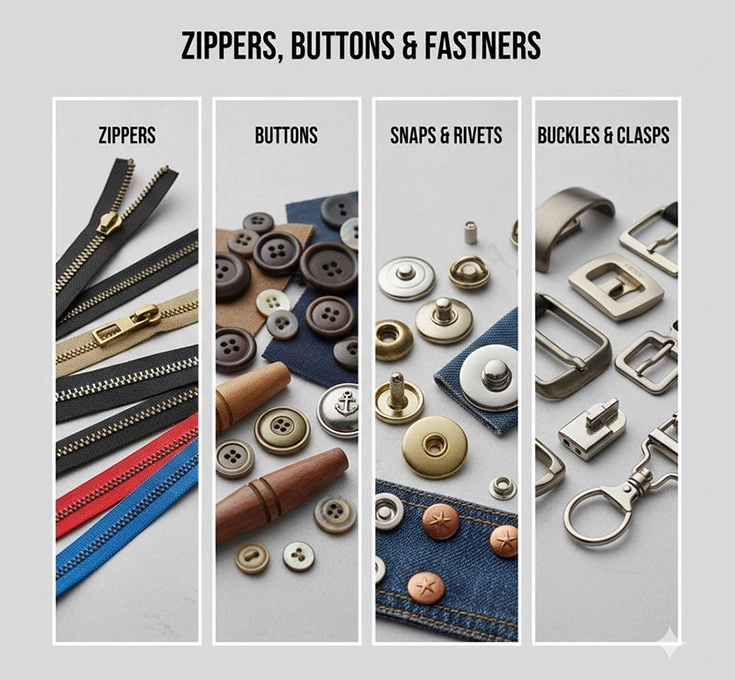
A complete trim sourcing process covers buttons, zippers, elastic, lace, labels, hangtags, bags and cartons when those components affect appearance, function or packing. Match trims to the fabric and record size, color and approval status.
Trim substitutions can change the look or performance of a garment, so they should be approved before bulk assembly. For private-label orders, confirm artwork and placement for the main label, care label, hangtag and packaging at the same time as the fabric standard.
Move From Approved Sample to Bulk With a Record
The bulk order should reference the approved fabric, color, composition, width, quantity, lot identification and delivery requirement. Keep the source and approval record together so receiving, cutting and quality teams can identify what belongs to the style.
- Freeze the approved swatch or lab dip with the style file.
- Confirm the material quantity includes the planned consumption and any agreed allowance.
- Identify which trims must arrive before cutting and which can follow later.
- Review shade, hand feel and visible defects when bulk fabric arrives.
- Keep a substitution approval path in writing before any change reaches production.
Kaou You Apparel maintains fabric and trim sourcing channels and can coordinate sourcing, dyeing, preshrinking, cutting, sewing, washing, ironing and packaging through a one-stop production system. Buyers should still approve the final material standard before bulk work begins.
A Good Sourcing Decision Balances Feel and Control
The best fabric is the one that supports the garment’s design while remaining available, repeatable and understandable to the production team. Compare material options against the same criteria, approve color and hand feel deliberately, and keep the final record close to the bulk order.
Share your garment brief, target material direction, quantity and launch timing so the team can screen options with the whole project in view. You can send a fabric sourcing inquiry to Kaou You Apparel for review.
FAQ
How do clothing manufacturers source fabric?
They can review the garment brief, recommend available materials, arrange swatches or color references, coordinate development and then confirm the bulk material before cutting. The exact route depends on the fabric and order requirements.
What is the difference between a swatch and a lab dip?
A swatch is a physical material sample used to assess construction suitability and hand feel. A lab dip is commonly used to review a developed dye color against an approved reference before bulk dyeing.
Should fabric be approved before the first sample?
The buyer should approve enough material direction for the sample to be meaningful. If the final fabric changes later, fit, drape, opacity, care and cost may need to be reviewed again.
Can a startup source custom colors in a small order?
It may be possible, but the practical route depends on the fabric, dyeing method, color quantity and supplier conditions. Ask which colors are ready stock and which require development before planning the order.
How can a brand reduce fabric sourcing risk?
Use a clear brief, compare swatches against agreed criteria, approve color references, inspect bulk material on arrival and document substitutions. Keep the approved sample and material record together through production.